
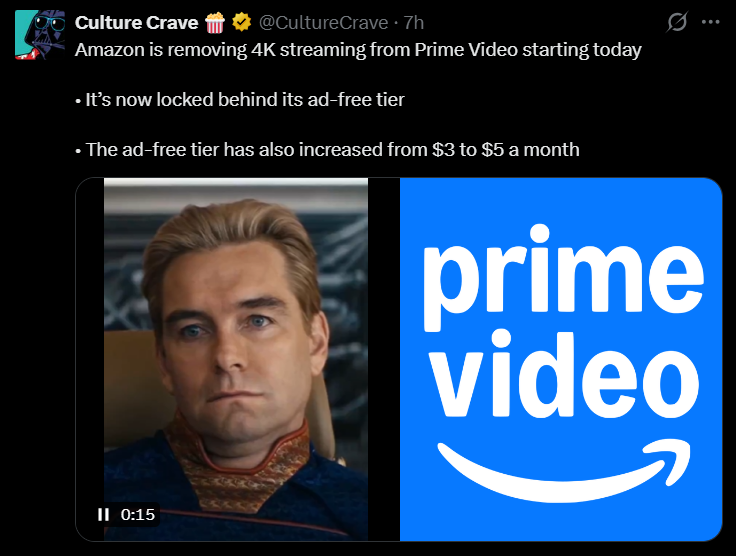
Starting April 10, 2026, Amazon has officially removed 4K Ultra HD streaming from its standard Prime Video plan. If you are paying $14.99 a month or $139 a year for an "Amazon Prime membership," you will no longer have access to 4K content unless you pay for an add-on subscription. Amazon has rebranded its existing "Ad Free" tier, which previously cost $2.99/month, into a brand-new premium tier called "Prime Video Ultra," which is now priced at $4.99/month (or $45.99/year, saving approximately 23% compared to monthly billing).
This change shows a 67% price increase over the old ad-free add-on, and it simultaneously strips one of the most valued features, '4K UHD' resolution from the base membership tier, which has offered it to all Prime members for years. Under this new structure, standard Prime Video subscribers (those who do not upgrade to Ultra) will be limited to HD and HDR streaming at 1080p.
This means that even if people own a 4K OLED or QLED television, the Prime Video content will not display in its full resolution unless they subscribe to the new Ultra tier. Amazon is simultaneously introducing "Dolby Vision HDR" support at no extra charge for the base plan, but critically, "Dolby Atmos audio" and 4K UHD video remain exclusive to Prime Video Ultra.
Current subscribers who already pay the $2.99/month ad-free fee will be automatically transferred to the Ultra tier at the new $4.99/month rate unless they actively choose to cancel the add-on.
Current subscribers who already pay the $2.99/month ad-free fee will be automatically transferred to the Ultra tier at the new $4.99/month rate unless they actively choose to cancel the add-on.
Additional Perks:
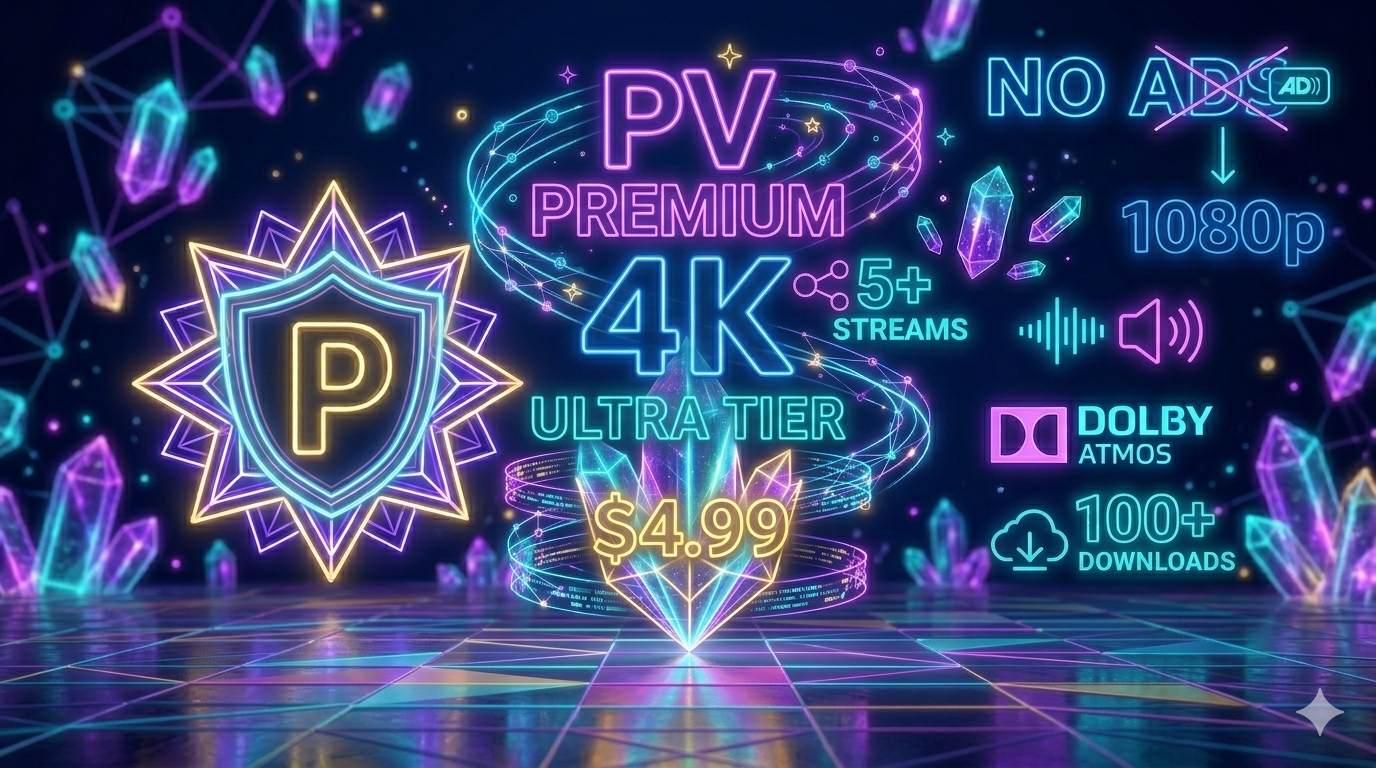
The Prime Video Ultra tier does contain additional perks beyond 4K access, up to five concurrent streams (up from three), 100 offline downloads (up from 25), no advertising during most on-demand content, Dolby Vision, and Dolby Atmos surround sound. However, it is important to note that live sports and certain licensed programming may still contain ads even on the Ultra plan, due to the nature of live broadcasting rights and third-party channel agreements.
The Reasons Behind this Change?
Amazon's Official Justification:
Amazon addressed the change in a corporate statement, saying, "Delivering ad-free streaming with premium features requires significant investment, and this structure aligns with other major streaming services while ensuring customers have the flexibility to choose how they want to watch."
Basically, the company presents "Prime Video Ultra" as a natural evolution of its streaming product, which is of course a method that is consistent with the industry-wide trend. In essence, Amazon argues that the cost of maintaining premium 4K infrastructure, licensing deals, and ad-free delivery justifies a more premium price point.
Beyond the official statement, industry analysts point to several deeper motivations behind this Amazon Prime Video pricing change. Since introducing ads to Prime Video in January 2024, Amazon has built a dual-revenue model combining subscription fees with advertising income. Locking 4K resolution behind a paywall deepens this strategy by creating a clear financial incentive to upgrade.
Reports also indicate that Prime Video's ad frequency increased to approximately six minutes per hour through 2025, which is roughly double the industry average of 2–3.5 minutes. This intensifies subscriber frustration and boosts demand for an ad-free option. Amazon even faced a class-action lawsuit from subscribers previously, who alleged the company deceived them by inserting ads into a previously ad-free service. A federal judge dismissed the suit, ruling that Amazon's ad introduction was a permissible "benefit modification" under subscriber agreements.
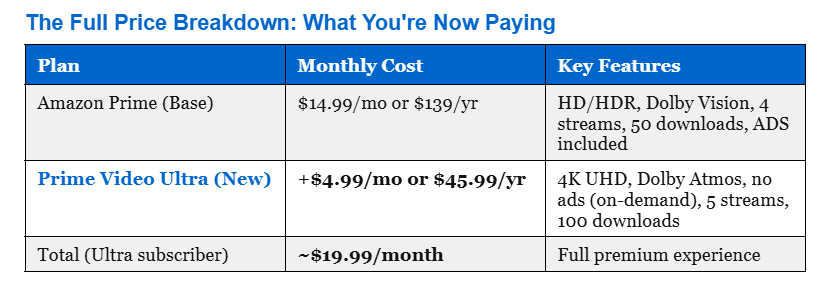
The old ad-free tier cost $2.99/month. The jump to $4.99/month is a $24 annual increase for existing subscribers. Those who stick with the base Prime plan and forgo Ultra will lose 4K entirely but do gain a few modest perks, such as: Dolby Vision support, a bump from 3 to 4 concurrent streams, and 50 downloads (up from 25).
What are your thoughts on the recent move made by Amazon?
Do you think the reasons are justified?
Were these prices increased for the compensation of maintaining infrastructure or just for making more profits?
Let me know in the comments, where you can also provide the latest news so I can make a breakdown of it.
While we are on this topic, do you know that Netflix also increased its price from 2017 to 2024 in Italy, but Italy's Court of Rome declared Netflix's subscription price as illegal and ordered refunds of up to €500 for Premium subscribers with a price rollback? However, Netflix is appealing. So, check out for further details in my previous article.